Why a 500% Spike in Memory Prices Could Quietly Raise Your AI Costs
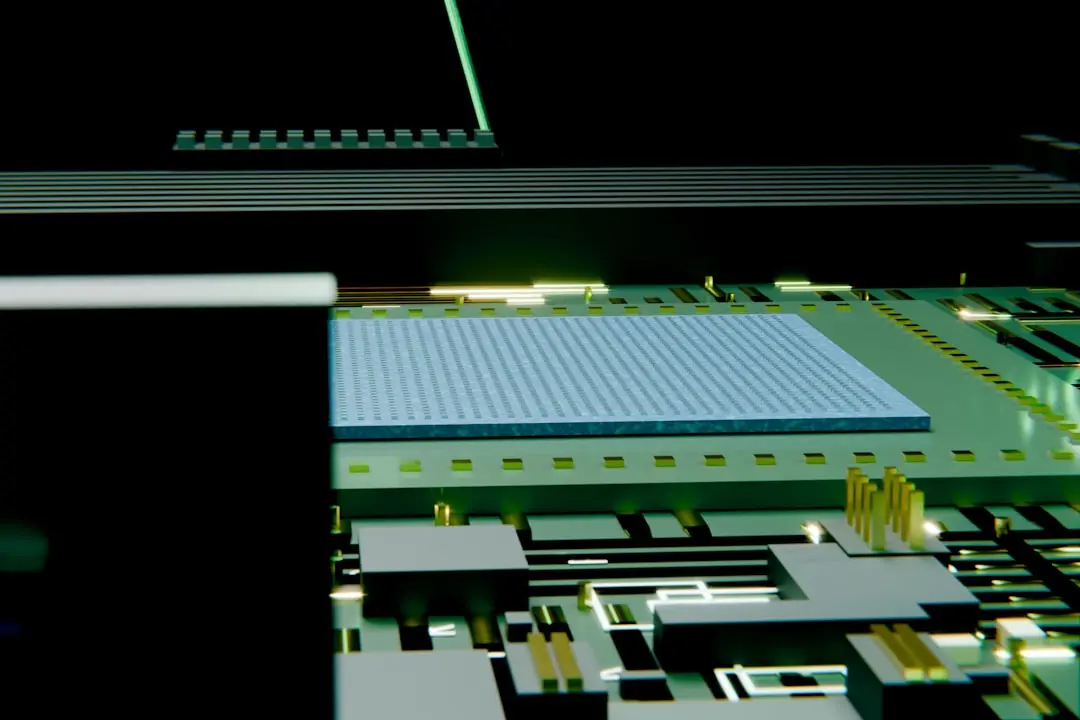
DRAM and HBM prices have climbed roughly 500% in 12 months, a hardware shock that sits underneath every GPU and inference bill and could slow or reverse the token-price deflation AI builders have gotten used to.
Key takeaways
- Memory (DRAM/HBM) prices are up roughly 500% over the past 12 months, per Tom's Hardware, with some configurations up to 10x the lowest price ever tracked.
- A 128GB DDR5 kit now costs around $3,399, according to the same report, a price point that would have looked absurd a year ago.
- Hyperscale buyers have reportedly locked in nearly all global DRAM production capacity for 2027 with advance deposits, which limits supply for everyone else building AI infrastructure.
- On a per-unit basis, RAM pricing has effectively reversed roughly 20 years of Moore's Law progress, back to levels last seen around 2007.
- For founders building on top of LLM APIs, this is a hardware-layer cost pressure worth watching even if you never touch a server, because it feeds directly into what providers charge per token.
What's actually happening to memory prices?
Tom's Hardware reports that DRAM and HBM prices have climbed about 500% over the last year, with some products now up to 10 times the lowest price ever recorded. A 128GB DDR5 kit, which would have been a mid-range purchase not long ago, now runs around $3,399. The report puts it starkly: DRAM is now worth more than half as much per kilogram as solid gold.
This isn't a short-term blip either. Hyperscale buyers, the companies running the largest AI data centers, have reportedly already locked in almost all available global DRAM production capacity for 2027 with advance deposits. That's a signal that the people closest to the supply chain don't expect this to resolve quickly.
Why does memory pricing matter if you're building an AI product?
Every inference request touches memory, whether it's loading model weights, holding KV cache, or moving data between GPU and system RAM. When memory gets 5-10x more expensive, the cost of running inference infrastructure goes up regardless of what happens to model architecture or token pricing wars. Providers have to absorb that cost somewhere, and "somewhere" eventually shows up in API pricing, rate limits, or the pace of future price cuts.
For the last couple of years, builders could mostly assume token prices would keep drifting down as compute got cheaper and competition intensified. A memory shock like this is exactly the kind of hidden variable that could slow, or even reverse, that trend for some providers or model tiers.
Is this actually reversing Moore's Law?
Analyst Daniel Lemire's framing, cited in the same roundup, is blunt: computer memory has fallen at an exponential rate for decades, and this shock undid roughly two decades of that progress in a matter of months, putting RAM on a per-unit basis back around 2007 pricing levels. Whether or not that trend fully persists, it's a reminder that AI cost curves aren't purely a function of model efficiency gains. Hardware supply shocks can move the floor under everyone's pricing, including yours.
What should founders actually do about it?
You can't control DRAM pricing, but you can control how exposed your margins are to provider price changes. That starts with knowing your actual cost per request and per user today, not a number from six months ago, since token prices and infra costs can both move underneath you. If a chunk of your gross margin depends on token prices continuing to fall, it's worth stress-testing what happens to your unit economics if they instead flatten or creep up over the next year.
A memory shortage on the other side of the world is not something most SaaS founders think about day to day. But it's a good example of why keeping your cost model current, rather than set-and-forget, is worth the hour it takes.
Frequently asked questions
Why have memory prices gone up 500% in a year?
Reports point to a global DRAM and HBM supply shortage driven largely by AI infrastructure demand, with hyperscale buyers locking in most available 2027 production capacity in advance, which has pushed prices for products like 128GB DDR5 kits to roughly 10x their lowest historical price.
Does rising memory cost affect LLM API pricing?
Not directly or immediately, but memory is a real input cost for every inference request, so sustained memory price increases put upward pressure on the infrastructure costs that eventually factor into what providers charge.
Should AI product pricing assume token costs keep falling?
Not automatically. Token price deflation has been the norm recently, but hardware supply shocks like this one show that assumption can break, so it's worth modeling your margins under flat or rising cost scenarios, not just falling ones.
What does "RAM pricing back to 2007 levels" mean?
It means that, on a per-unit basis, memory now costs roughly what it did around 2007, reversing about two decades of the steady price declines typically associated with Moore's Law.
How can a founder protect their margins from this kind of hardware shock?
By tracking actual cost per request and per user regularly rather than assuming past pricing holds, and by building pricing models flexible enough to absorb provider cost changes without an emergency repricing. (Place the JSON-LD block above inside a <script type="application/ld+json"> tag in the page head.)
More from the blog
 LLM Economics
Jevons Paradox in AI: Why Cheaper Tokens Mean Bigger Bills
Jevons paradox in AI means that when tokens get cheaper, people use so many more that total spend rises. If price per task halves from $0.10 to $0.05, volume must double just to hold spend flat, and a tripling lifts spend 50 percent.
 LLM Economics
OpenRouter Pricing: What a Gateway Really Costs
OpenRouter pricing is the underlying model rate plus whatever platform fee the gateway adds, so the real question is net cost. Say a 5 percent fee on $10,000 of monthly tokens adds $500, and routing 15 percent of spend to cheaper models saves $1,500, a net gain of $1,000.
 LLM Economics
MoE Cost per Token: Why Active Parameters Rule
For a mixture-of-experts model, compute per token follows active parameters, while the GPUs you must rent follow total parameters. A model with 40B active out of 400B total can be cheaper per token than a dense 70B at high utilization, and more expensive when traffic is thin.
Pricing math, in your inbox.
One short note a week on AI pricing, token economics, and margin. No spam, unsubscribe anytime.