Cheaper Tokens Do Not Equal Better Margins: What GPT-5.6's Efficiency Push Means for Your AI Unit Economics
Provider efficiency gains only reach your P&L if your own architecture captures them: your prompt-cache hit rate, your agent loop length, and your model tiering decide whether a 20% serving-cost cut becomes 20% of margin or nothing at all.
Key takeaways
- OpenAI reports a 20% cut in end-to-end serving costs from kernel optimizations, and a 15%+ improvement in token-generation efficiency from a better speculative-decoding draft model.
- Tiering, not haggling, is the biggest price lever available to you: Luna is priced 80% below Sol, and Terra is described as matching GPT-5.5 intelligence at half the price.
- Provider-side efficiency shows up in list prices at their discretion. Architecture-side efficiency shows up in your COGS immediately.
- The expensive part of an agent product is the repeated region of a single turn, not the single model call you benchmarked.
- Model the effect on your tiers and margins before you reprice, because customer expectations reset faster than your cost base does.
What did OpenAI actually change?
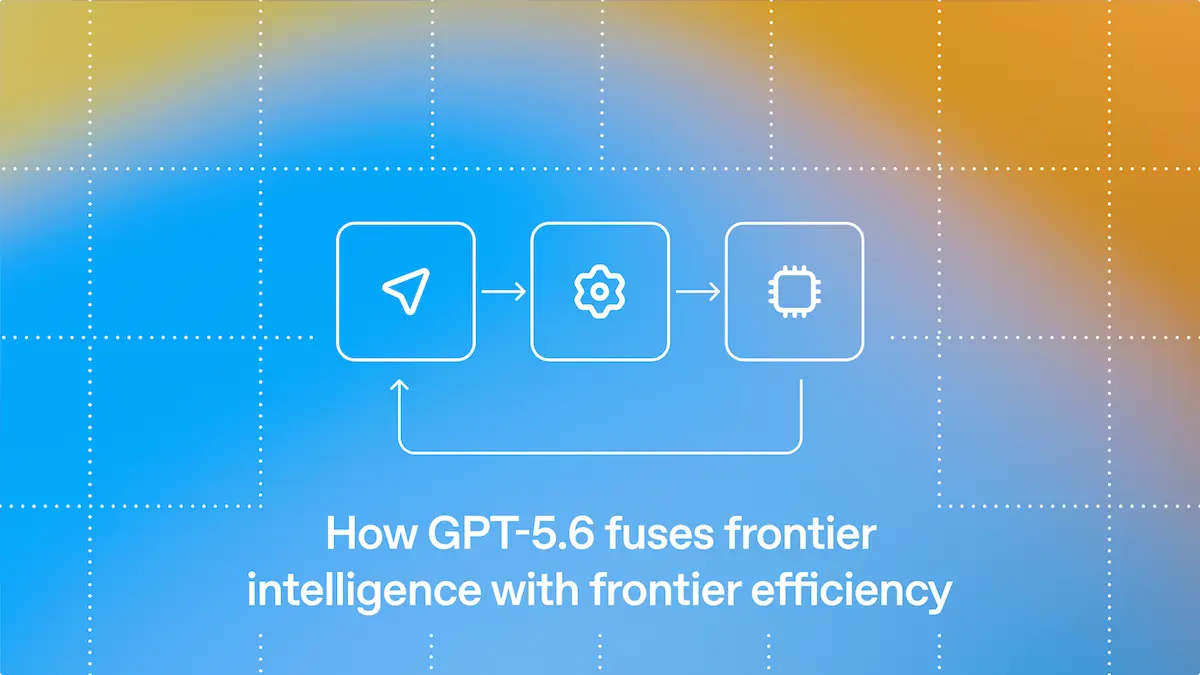
Three layers, not one. The model itself is trained to do more work per token. The inference stack was reworked: load balancing, speculative decoding, prompt caching, and GPU kernels, with the reported result being roughly 20% lower end-to-end serving cost from kernel work and more than 15% better token-generation efficiency from the improved draft model. The third layer is the agentic harness, a Rust orchestration layer that caps tool output at 10,000 tokens by default and keeps model-visible history append-only so prompt-cache prefixes stay intact.
That third layer is the part worth copying. The first two are OpenAI's cost problem. The third is yours.
Why do cheaper tokens not automatically raise your margin?
Because a provider's efficiency gain is an input to their pricing decision, not a rebate to your invoice. You benefit only when it is passed through as a lower price per million tokens, on the specific tier and modality you actually use, and only in proportion to how much of your bill sits in that line item.
Say, illustratively, that inference is 55% of your COGS and half of that spend sits on a tier that gets a 20% price cut. Your COGS falls about 5.5%. On a 60% gross margin that is a couple of points, not a re-rating. Meanwhile, if your agent loop grew from 8 model calls to 30 over the same two quarters, you gave the entire gain back and then some.
Where does the cost actually live in an agent product?
Inside the loop. One user turn can contain many model calls and tool calls, and anything sitting in that repeated region gets paid for repeatedly: the system prompt, the tool definitions, the conversation history, the last tool result. This is the number most founders never measure, because their spreadsheet models one request and their product ships thirty.
Two cheap architectural fixes follow directly from the OpenAI write-up:
- 1Keep prefixes byte-stable. Append new messages and tool results at the end. Never insert into earlier context, never reorder tool definitions, never bake runtime settings into tool schemas. Every prefix mutation is a cache miss you pay full price for.
- 2Cap what tools can return. A tool that dumps 40,000 tokens of log output into context does not just cost you once. It costs you on every subsequent iteration of that turn.
How should this change your pricing, not just your infrastructure?
Carefully, and in that order. Falling token prices are a trap for anyone whose plan pricing is implicitly indexed to them. Two failure modes are common: the seat-based product that quietly funds unlimited agent usage on its highest-margin plan, and the usage-based product that passes cost cuts through so fast it never builds a margin buffer for the next capability jump.
A better sequence: measure cost per successful task, not cost per token. Segment it by tier and by customer cohort. Then decide how much of a provider price cut you keep as margin, how much you spend on capability (longer loops, better models, more retries), and how much you pass to customers as a competitive move. Those are three different decisions and they should be made explicitly.
One more thing worth noticing
The post describes GPT-5.6 Sol doing much of its own optimization work: rewriting production kernels, running hundreds of draft-model experiments, tuning serving configurations. If that pattern holds, provider cost curves start improving on a compute schedule rather than an engineering-headcount schedule. Plan your pricing on the assumption that per-token costs keep falling and that your competitors' costs fall too. Durable margin comes from what you build around the model, not from the model's price tag.
Takeaway: treat every provider price cut as a decision to allocate, not a windfall to celebrate. You can model the tier-by-tier margin effect in Calcaas before you touch your pricing page.
Frequently asked questions
How much did GPT-5.6 reduce inference costs?
OpenAI reports roughly a 20% reduction in end-to-end serving costs from kernel optimizations, plus a more than 15% improvement in token-generation efficiency from an improved speculative-decoding draft model. These are provider-side serving costs, which are not the same thing as your list price per million tokens.
Does a cheaper model tier always lower my total cost?
No. A smaller model can need more retries, longer reasoning, or more tool calls to finish the same task, which can erase the per-token saving. Compare cost per successfully completed task across tiers rather than price per million tokens.
What is the fastest way to cut LLM costs without changing providers?
Raise your prompt-cache hit rate by keeping context append-only and tool definitions in a fixed order, cap tool output size, and route easy requests to a cheaper tier. These changes are architectural, land immediately, and do not depend on any provider price move.
Should I pass provider price cuts on to my customers?
It is a deliberate allocation, not an obligation. Split any cut three ways on purpose: margin you keep, capability you reinvest, and price you pass through. Model each split before you publish a new price, because a price reduction is far easier to announce than to reverse.
More from the blog
 LLM Economics
If AI Coding Is Not Winner-Take-All, Gross Margin Decides Who Survives
Cognition raised at a $48B valuation, which TechCrunch reads as investors betting that AI coding is not a winner-take-all market, and in a market with many survivors the winners are usually decided by unit economics rather than by being first.
 LLM Economics
A 33x Price Gap for the Same Model Is Not a Market. It Is a Tax on Not Checking.
A developer who tracks LLM API list prices daily reports a 33x cost gap for the identical model depending on which provider you call, which means most of what teams call their AI cost is really a procurement decision they never made.
 LLM Economics
The Same Model, 14 Providers: Why Your LLM Bill Depends on Where You Run It
Choosing a model sets your capability ceiling, but choosing the provider that serves it sets your actual bill, because price, throughput and prompt caching all differ between endpoints running the identical weights.
Pricing math, in your inbox.
One short note a week on AI pricing, token economics, and margin. No spam, unsubscribe anytime.