1,000x Cheaper AI Inference: What It Would Actually Do to Your Margins
Even a 1,000x cut in inference power costs would reshape AI unit economics, but only the share of your bill that is energy moves at that rate, not hardware, overhead, or provider markup.
Key takeaways
- Naveen Rao, former AI chief at Databricks and founder of MosaicML, launched Unconventional AI, whose first model Un-0 uses an oscillator-based architecture he claims could cut AI power costs by up to 1,000x.
- Power is only one slice of inference cost. Hardware amortization, networking, and provider margin do not fall at the same rate.
- For most SaaS products, model inference is only a fraction of COGS, so cutting it changes gross margin less than founders expect.
- The bigger lever is usually pricing and packaging, not raw token cost.
- You can model any cost-cut scenario against your own tiers before betting the roadmap on it.
What did Databricks' former AI chief actually announce?
Naveen Rao, who led AI at Databricks and earlier founded MosaicML, unveiled Unconventional AI. Its first model, Un-0, demonstrates an oscillator-based architecture that generates images at efficiency comparable to conventional systems. Rao's claim: the approach could lower the power cost of AI processing by up to 1,000x, with a full inference stack planned over the next year. The pitch targets the energy ceiling that increasingly caps AI scaling.
That is a research-stage claim, not a shipping price. But it is worth taking seriously as a thought experiment for anyone modeling AI costs.
Why a 1,000x power cut is not a 1,000x cost cut
Your inference bill is not pure electricity. Whether you run your own GPUs or pay an API price, what you pay per token bundles the GPU amortized over its life, the energy to run it, data-center overhead and cooling, networking, and the provider's margin. Energy is a meaningful share, but it is not the whole thing.
If energy were, say, a third of the true cost of serving a token and you cut it by 1,000x, that third nearly vanishes, but the other two thirds remain. The total drops by roughly a third, not by 99.9%. The headline multiple applies to one input, not the whole invoice.
For founders, the lesson is to separate the variable cost that scales with usage from the fixed and markup costs that do not.
How much would your margins really move?
Here is the part founders miss: for most SaaS and AI products, model inference is only a portion of cost of goods sold. Hosting, storage, support, third-party tools, and payment fees all sit alongside it.
For example, say model inference is 20% of your COGS and a breakthrough halves your real serving cost. Your total COGS falls by 10%. If you were at a 70% gross margin, you move to roughly 73%. Real, but not transformational. The same cut matters far more to a company where inference is 80% of COGS, like a high-volume image or video generator.
The point is that the same efficiency gain is worth wildly different amounts depending on your cost structure. That is exactly the kind of thing worth modeling per product, not assuming.
What should founders do with cheaper inference?
Cheaper inference is rarely banked as pure margin. In competitive categories, it tends to get passed to customers as lower prices or more generous usage limits. The strategic question is whether you keep the savings, reinvest them into a better product, or use them to undercut on price.
That decision is a pricing and packaging problem, not an engineering one. If your tiers are priced on the value customers perceive rather than raw token cost, a cost cut becomes optional margin you control. If you price at cost-plus, your competitors' cost cuts force your hand.
The takeaway
A 1,000x efficiency breakthrough is exciting, but its impact on your business depends entirely on how much of your bill is energy, how much is inference, and how you price. You can model the scenario against your own tiers in Calcaas before assuming it changes everything.
Frequently asked questions
What is Unconventional AI's 1,000x claim?
Naveen Rao, former AI chief at Databricks, says his new company's oscillator-based architecture could cut the power cost of AI processing by up to 1,000x. The first model, Un-0, generates images at efficiency comparable to conventional systems. It is an early-stage claim, with a full inference stack planned over the next year.
Does cheaper AI inference automatically improve my margins?
Not automatically. Inference is usually only part of your cost of goods sold, and energy is only part of inference cost. The margin impact depends on how large a share inference is for your specific product and whether you keep the savings or pass them to customers.
How do I calculate AI inference cost per user?
Estimate average tokens per request, multiply by requests per user per month, then multiply by your blended input and output price per million tokens. Layer that onto your fixed costs to get a per-user cost you can compare against your price.
Should I lower prices when inference gets cheaper?
It depends on your competition and how you price. If your pricing reflects customer value, you can keep the savings. If you price at cost-plus in a crowded market, falling costs tend to pull prices down across the whole category.
More from the blog
 LLM Economics
Moonshot AI's 300 Billion Daily Tokens: What It Signals About the Model Market
A Chinese lab targeting $2B in revenue is notable, but the more useful number for founders is the sheer token throughput reshaping provider economics.
 LLM Economics
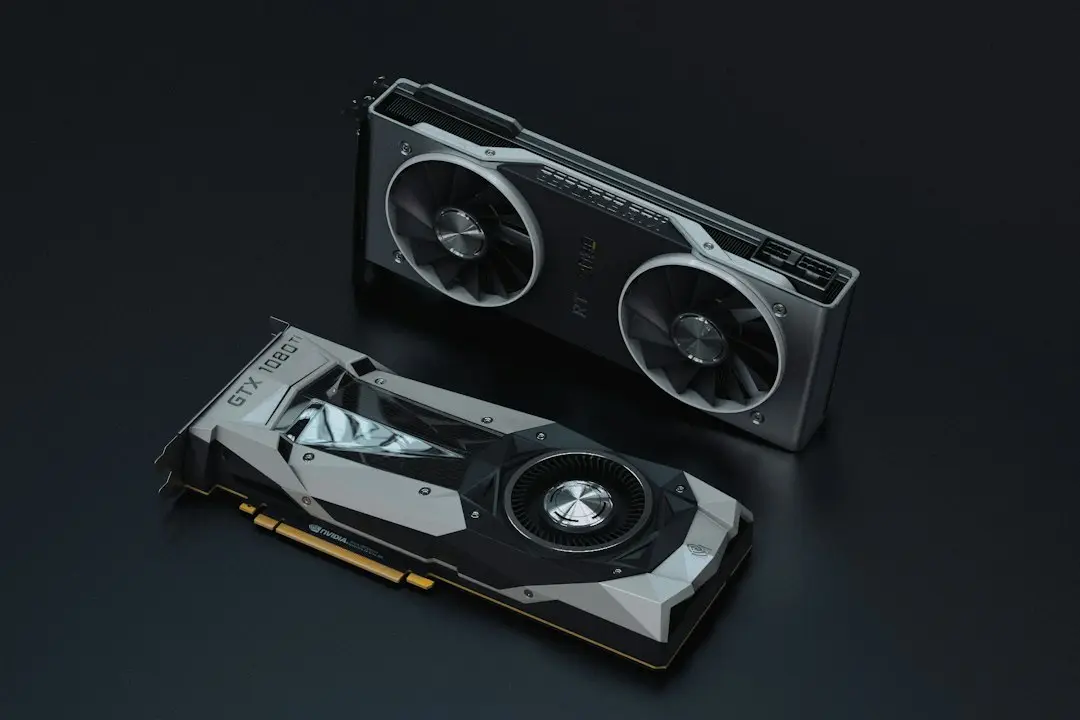
What Nvidia's Vera Rubin Platform Means for Your Token Costs
Better performance-per-watt on the hardware side eventually shows up as lower token prices, but the timeline and who captures the savings first is worth understanding.
 LLM Economics
The Real Total Cost of an LLM Gateway: Why the License Fee Is Never the Whole Story
A vendor comparison of LiteLLM's enterprise pricing against a managed alternative shows why a $250/month license number hides most of the actual 3-year cost.
Pricing math, in your inbox.
One short note a week on AI pricing, token economics, and margin. No spam, unsubscribe anytime.